Walk into any cutting-edge corporate headquarters today, and what’s the first thing you see? It’s probably not a framed painting or a static, backlit logo. It’s a massive, vibrant, and dynamic digital display. We’re talking about modern corporate video walls. These installations have rapidly evolved from a niche, ultra-expensive luxury to a powerful, mainstream tool for communication and branding.
But why the sudden boom? Let’s be honest, we live in a world saturated with information. The average office worker receives over 120 emails a day. Our traditional methods of communication—email, intranet portals, printed posters in the breakroom—are drowning in the noise. A modern video wall cuts through that clutter like a hot knife through butter. It’s not just another screen; it’s a communication centerpiece.
Think about the difference between a framed poster and a high-definition movie. One is a static snapshot; the other is an immersive experience. That’s the leap we’re making in the corporate environment. A static sign might tell you the company’s name. A dynamic video wall can show you the company’s soul. It can display real-time data dashboards, welcome a major client by name, celebrate an employee of the month, or stream a live all-hands meeting from the CEO. It transforms a physical wall from a simple barrier into a dynamic canvas for storytelling.
In essence, modern corporate video walls represent the future of visual communication in the workplace, seamlessly integrating technology and design.
When I say “video wall,” you might picture a bank of 1990s-era TVs stacked together, separated by thick plastic borders (known as bezels). Forget that image entirely. Today’s technology is vastly more sophisticated. A modern corporate video wall is a fully integrated digital display system designed for high-performance, long-term use.

The true definition isn’t just the screens themselves, but the entire ecosystem: the high-resolution displays, the powerful processing-engine that manages the content, and the software that lets you decide what plays, where, and when.
When you start shopping, you’ll immediately hit a fork in the road: LED or LCD? They are not the same, and your choice will have a huge impact on your budget and final result.
This is the big gun. Direct View LED (or dvLED) is the technology you see in Times Square or at a rock concert, but scaled for the corporate world. It’s not a screen that’s lit from behind; the LEDs are the screen.
This is the more traditional approach, using multiple commercial-grade LCD panels designed to work together.
Okay, they look cool. We get it. But what’s the actual, measurable return on investment (ROI)? Why should your CFO approve this?
This, in my opinion, is the most powerful application. Forget the “email everyone” approach. A video wall in a high-traffic area (like the cafeteria or near the elevators) becomes your central information hub. You can:
It shifts communication from “something you have to read” to “something you experience.”
Your lobby or reception area is the first physical handshake you give to a potential client, partner, or top-tier job candidate. What does yours say about you? A dusty plant and a 10-year-old logo?
A stunning video wall makes an immediate, powerful statement. It says, “We are innovative. We are dynamic. We invest in quality.” You can display stunning brand videos, curated digital art, or a personalized “Welcome, [Client Name]” message. It sets the tone for the entire meeting before you’ve even said a word.
A video wall is not a one-size-fits-all solution. The technology you’d use in a small boardroom is completely different from what you’d put in a massive auditorium.
Here, the goal is clarity and collaboration. These video walls are used for high-stakes presentations, crystal-clear video conferencing with global teams, and detailed data review. You’re sitting close, so you need high resolution (like 4K) and flawless performance. This is a prime spot for a high-end LCD or a fine-pitch LED wall.
As we just discussed, this is your “brand ambassador.” The goal here is impact and “wow” factor. Since viewers are typically further away, you can use a different-spec’d (and often more cost-effective) LED wall. It’s all about creating an atmosphere and reinforcing your brand identity.
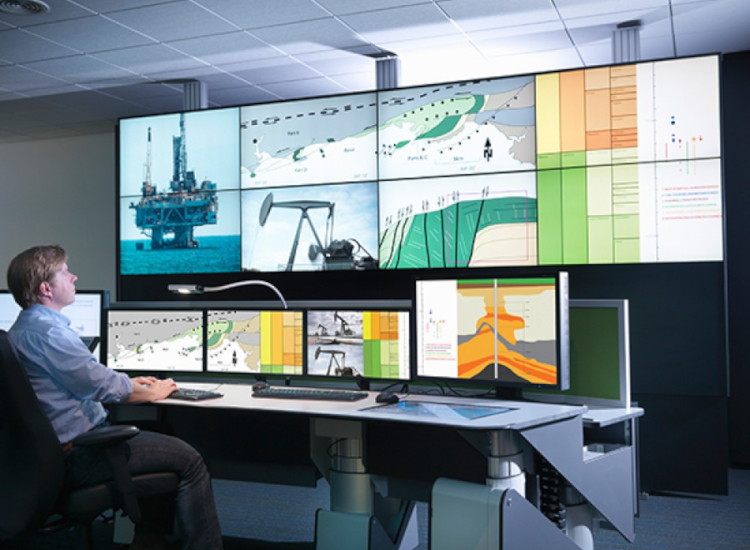
This is the “mission control” use case. In a NOC, IT, or security center, professionals need to monitor dozens of data streams simultaneously. A large video wall is the only practical way to display all that critical information—system health, security feeds, market data, logistics—in one consolidated, easy-to-read dashboard.

You’re convinced. You want one. Hold on. Buying a video wall is a major capital expenditure, and a few technical details can make or break your project.
This is the most important spec you’ve never heard of. Pixel pitch is the distance, in millimeters, from the center of one LED to the center of the next.
Here’s the key: the lower the pitch, the higher the cost. Why pay a premium for a 1.2mm pitch wall in a lobby where no one will ever get closer than 20 feet? Matching your pixel pitch to your average viewing distance is the #1 way to get the most value for your money.
That beautiful, $100,000 video wall is just an expensive, blank rectangle without a good Content Management System (CMS). The CMS is the brain of the operation. It’s the software that lets you or your team actually use the wall.
Before you buy, ask these questions:
A powerful wall with a weak CMS is a recipe for an underused, overpriced piece of tech.
This is the part everyone forgets. Don’t be the company that spends a fortune on a video wall only to display a static logo and the time. You have a dynamic canvas—use it!
Your content strategy should be a living, breathing thing. Mix it up:
A great video wall is a reflection of a great content strategy.
The technology isn’t standing still. The next wave is already here. We’re seeing more interactive and “smart” walls that use sensors or cameras to change content based on who is nearby. Resolutions are pushing into 8K and beyond, creating “hyper-realistic” images. And with the rise of AI, we’ll soon see content that’s not just scheduled, but curated in real-time, based on the time of day, the number of people in the room, or even the corporate calendar.
So, after all this, what’s the verdict?
A corporate video wall is no longer just a piece of technology; it’s a strategic communication asset. It’s a tool for engaging your employees, dazzling your clients, and bringing your brand to life.
When you stop thinking of it as an “expense” (like a big TV) and start seeing it as an “investment” (like a key employee), the value becomes clear. It’s your 24/7 brand ambassador, your real-time data analyst, and your chief cultural officer, all rolled into one. In the modern corporate arms race for talent and attention, a video wall isn’t just a way to keep up—it’s a way to lead.
We offer a versatile and customizable visual experience, empowering businesses to enhance their brand presence and captivate their audience.