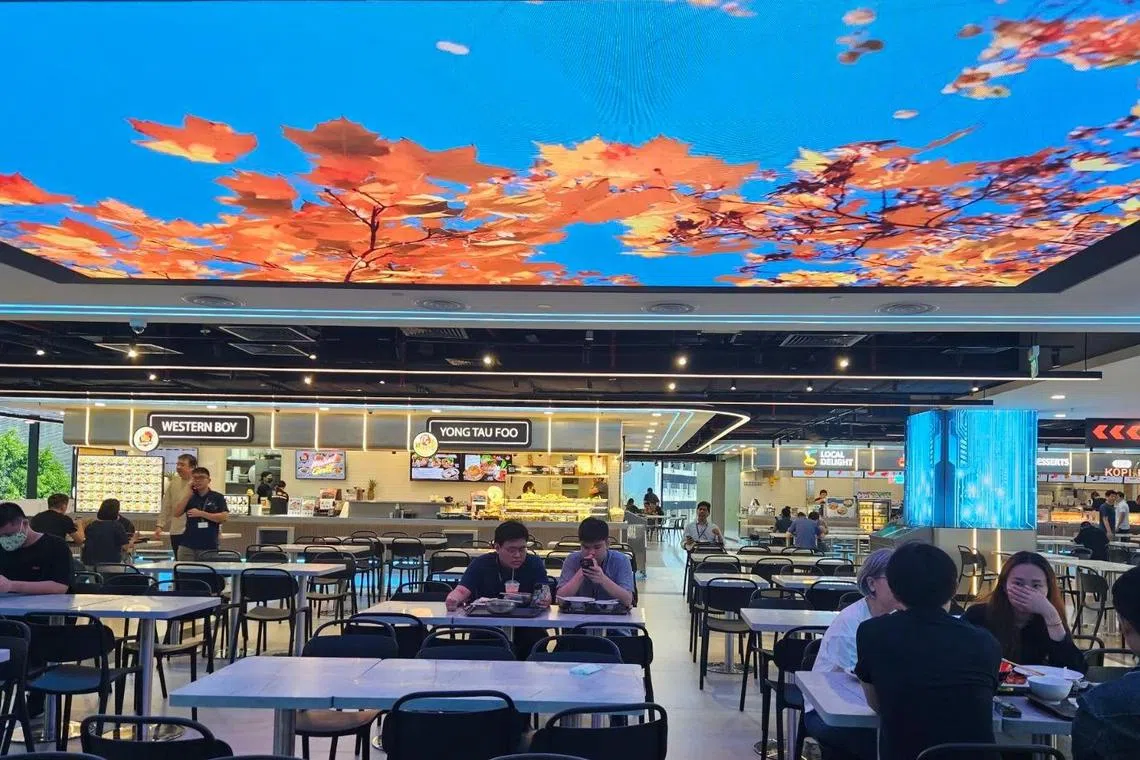
Kopitiam at Mapletree Business City has introduced “Kimberly”, a multilingual AI avatar that helps diners decide what to eat, check seat availability, and navigate through the innovative ai powered foodcourt. The pilot promises speed and convenience, while raising fair questions about privacy and the human touch in service.
Tucked inside Mapletree Business City (MBC), this Kopitiam is billed as Singapore’s first AI-enabled food court. Front and centre is Kimberly—a lifelike, on-screen assistant on a digital signage kiosk you can talk to for directions, stall info, and menu suggestions. Think of her as a friendly concierge who knows the entire food park: where to sit, what’s popular now, and which stalls suit your cravings in the ai powered foodcourt.

At peak hours, the pain is real: long queues, full tables, indecision. By surfacing seat availability and tailoring dish ideas in seconds, an AI front layer can shorten the entire dining loop—decide, order, sit, eat—so you can actually enjoy your break (or get back to the desk on time). Early observers say it could lift operational efficiency and overall service quality.
The same tech that guides diners can generate business insights: traffic patterns, dwell time, popular dishes, and demand spikes by time of day. With this data, operators can adjust staffing, prep, and menus more accurately—reducing waste, smoothing queues, and improving margins. That feedback loop benefits customers too: faster service, fresher items, and fewer stock-outs. (The rollout has been described as an AI-enabled upgrade that’s both guest-facing and back-of-house smart.)
Promotions around the launch also highlight UV-sterilised cutlery caddies and touchless amenities—small but meaningful touches that align with post-pandemic expectations for cleanliness in high-traffic dining spaces. When paired with AI, the message is clear: modern food courts must be clean, quick, and intuitive.
Not everyone is sold on automation. Commentators caution that technology should enhance, not replace, human warmth—especially in a setting built on neighbourhood hawker culture. The best version of Kimberly complements stallholders and cleaners: she handles FAQs and wayfinding, while people focus on food, hospitality, and problem-solving that requires empathy.

A multilingual avatar can lower language barriers for tourists, new residents, and international office staff at MBC. Clear, visual prompts and spoken replies also help those who prefer voice-first guidance over reading dense menu boards. For elderly diners, well-placed staff to assist with the tech keeps the experience friendly and inclusive.
When cameras, sensors, or conversational systems enter public dining, diners naturally ask: What’s being collected? How long is it kept? Is it anonymised? Operators should publish simple, visible notices and policies that explain:
If Kimberly proves her worth at MBC, expect copycats: large business parks, malls, and even transport hubs could deploy AI concierges for wayfinding, F&B promotions, and crowd control. For food operators, the playbook is attractive: higher throughput, sharper forecasting, richer guest data, and new marketing formats (e.g., time-bound dish recommendations during lulls). For diners, the win is simple: less friction, more flavour.
Kimberly is a glimpse of AI-assisted dining on a digital signage kiosk—small interactions that add up to a smoother lunch hour. If operators stay transparent about data and keep people at the heart of service, this model could set the tone for the next generation of food courts in Singapore.
We offer a versatile and customizable visual experience, empowering businesses to enhance their brand presence and captivate their audience.